


In this article you will learn everything about osteoarthritis of the knee joint: what it is, why it occurs, what the manifestations are in the different phases.How to treat, how to prevent the disease.
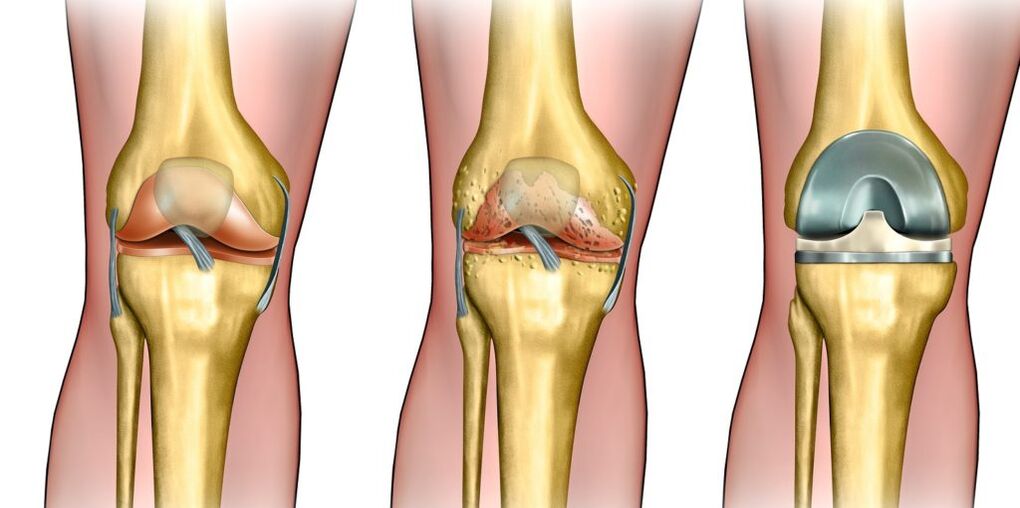
Osteoarthritis of the knee joint (gonarthrosis) is a degenerative pathology of the joint in which the cartilage is destroyed, the muscles and ligaments are damaged and the bones are deformed.
The disease occurs mainly after the age of 40 (12–16% of people this age are affected).Women get sick 2 times more often than men.Athletes and people involved in heavy physical work are susceptible to the disease.
Gonarthrosis develops gradually and is accompanied by joint pain:
- joint mobility decreases;
- bone and cartilaginous tissue grows, which interferes with the normal functioning of the joint.
Over time, this leads to complete immobility of the joint.Without treatment, the disease leads to disability.
Conservative therapy for arthrosis of the knee joint is possible only at the initial stages of the development of the process (1 and 2), as it allows you to slow down and stop the development of the pathology.
As the disease progresses, treatment is surgical only.You can completely (100%) get rid of pathology only with endoprosthetics - knee prosthesis.
Diagnosis and treatment of arthrosis of the knee joint is carried out by an orthopedic traumatologist and other doctors.According to indications, an appointment with a rheumatologist is scheduled.A sports doctor can also identify the symptoms of the disease.
Causes of the disease and types
Depending on the factor provoking the disease, there are 2 types of knee arthrosis:
Primary (idiopathic)
This type of osteoarthritis affects middle-aged and elderly people.The initial stages are diagnosed after the age of 40 and, above the age of 70, gonarthrosis is detected in 60% of people.Often two joints are affected at the same time.
Primary arthrosis occurs due to changes that occur in the body with age, deterioration of blood circulation and slowing of metabolism.The risk of development increases with obesity and a sedentary lifestyle.
Secondary form
Secondary - can appear in a person of any age and affect 2 joints at the same time and 1.
The reasons are:
- Great stress on the legs.
- Injuries to ligaments, knee menisci, intra-articular fractures.
- Diseases in which metabolic processes are disturbed (disorders of the parathyroid glands, diabetes, hemochromatosis, Wilson's disease, gout, mucopolysaccharidosis and other diseases).
- Connective tissue diseases.
- Inflammatory pathologies (infectious and non-infectious synovitis and arthritis), hemophilia (a rare hereditary disease associated with blood clotting disorders).
Next, we will look in more detail at what it is - arthrosis of the knee joint, its degree, what changes begin in the tissues during pathology.
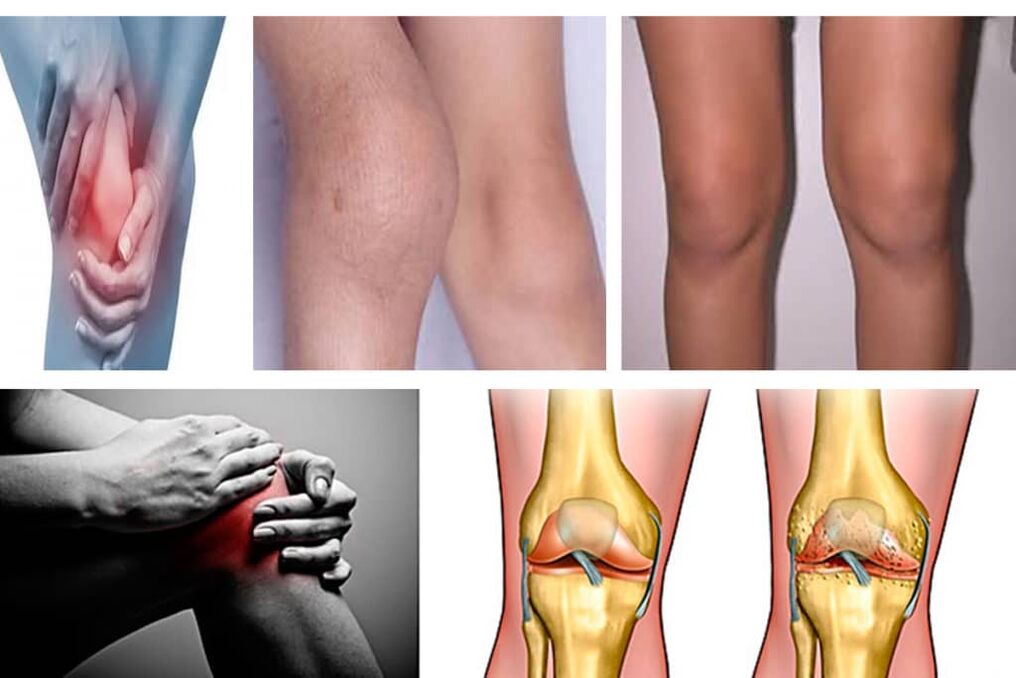
Symptoms and three stages of the disease
As the disease progresses, the cartilage begins to thin due to heavy loads or lack of nutrients.This causes friction between the bones that articulate in the knee joint.
Erosion in bone tissue is formed as a protective reaction of the body - the formation of bulges begins in it.All these factors lead to deformation of the knee joint and its limited mobility.
Symptoms of arthrosis of the knee joint in 3 stages:
| Stage | Clinical signs | Processes occurring in the joint |
|---|---|---|
| 1 |
May be asymptomatic Possible pain in the knees in the morning, when squatting, when climbing stairs, after long exercises and hypothermia Stiff knees in the morning Synovitis may occur - accumulation of fluid in the joint, which must be removed using a puncture (puncturing a cavity with fluid and collecting it) |
The surface of the cartilage becomes rough and dry Cracks and ulcerations form on it |
| 2 |
The pain appears even with small efforts and becomes more pronounced with active walking. The leg does not bend completely, the joint crunches periodically The knee visually expands The risk of synovitis increases further |
In response to increased loads on the joint, it appears to become flat Osteophyte formation – bone growth begins Synovial fluid becomes thicker and less nutritious Destructive processes in cartilage accelerate |
| 3 |
The pain becomes chronic and haunts the patient even at rest. Both full flexion and full extension of the knee are impossible Joint volume increases Walking is difficult, many people start using crutches or a cane Valgus deformity of the legs (X-shaped leg position) or varus deformity (O-shaped leg position) may appear. |
There is almost no cartilaginous tissue The bones are deformed and “pressed” against each other, which leads to limited mobility in the joint |
Acute form
Acute osteoarthritis of the knee joint is a time when the disease progresses more quickly and is more clinically pronounced.
Exacerbation may result from:
- too much stress on the joint;
- hypothermia;
- non-compliance with the prescribed diet;
- wound.
Sometimes gonarthrosis begins acutely, as if bypassing the first stage.This is possible due to a knee injury.
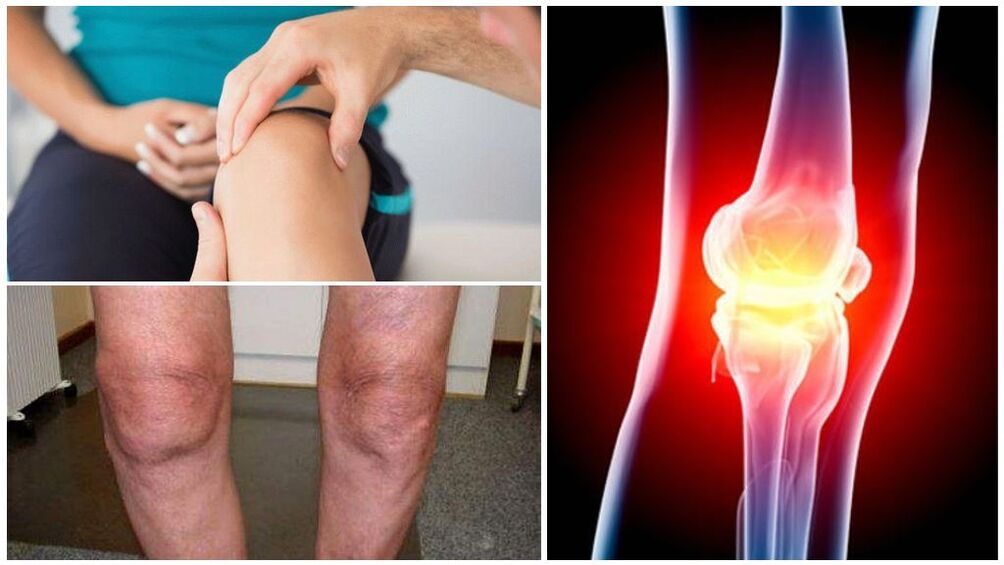
Diagnosis
If you notice stiffness in the joint that appears in the morning or after sitting for a long time, as well as pain when walking down stairs or squatting, this could be a sign of stage 1 gonarthrosis.
To make an accurate diagnosis, attend an appointment with a general practitioner, who will refer you to an orthopedist or other doctor.
Before treating osteoarthritis or gonarthrosis, the doctor will perform an initial examination and palpation of the joint, and will also consult:
- x-ray - will help assess the condition of the joint;
- Ultrasound will make it possible to determine whether there is a concomitant inflammatory process.
Treatment methods
With arthrosis of the knee joint, its symptoms and treatment are interconnected, since many therapeutic measures are specifically aimed at eliminating disturbing signs and improving a person's quality of life.
Taking medications, diet and exercise therapy:
- slow down new destructive processes in cartilage;
- prevent the disease from progressing to a more advanced stage.
It is impossible to completely cure the disease, but it is possible to stop and slow down the development of the pathology.
Diet
The goal of following a diet is to slow the progression of the disease.
What to add to the menu and what to exclude:
| Healthy Products | Prohibited Products |
|---|---|
| Rabbit, turkey, chicken, dairy products, eggs (no more than 3 pieces per day and preferably without yolks) - serve as sources of protein |
Fatty meats, sausages, sausages - lead to weight gain, which creates additional stress on the joint and also interferes with the normal formation of synovial fluid |
| Fish, especially red varieties, are rich in omega-3s |
Flour, sweets, mayonnaise, fast food - foods that contribute to excessive weight gain |
| Jellied meat made from bone broth, gelatin - contains chondroitin and collagen, which contribute to the formation of new cartilage tissue |
White cabbage, tomatoes, peppers, eggplants, according to some versions, contain substances that destroy collagen and chondroitin - “building blocks” of cartilaginous tissue However, some studies refute its harm in osteoarthritis. |
| Rice, corn and buckwheat contain complex carbohydrates that promote the formation of synovial fluid |
Egg yolks, cod liver – increase the risk of developing gout |
| Cottage cheese, cheese - sources of calcium |
Coffee – leaches calcium from the body, which is beneficial for bones and joints. |
| Apples, broccoli, beans, pumpkin, zucchini, parsley, dill, cucumber, carrots, celery, spinach, cereals, currants, grapefruit, pomegranate, papaya, almonds - the healthiest foods of plant origin Rich in joint-friendly ingredients |
Alcohol disrupts normal nutrition and metabolic processes in joints |
| Water (1.5–2 liters per day) – helps normalize the metabolism of the body and joints in particular Juices (the fruits and vegetables listed above) |
Salt - can lead to aggravation |
Physical education
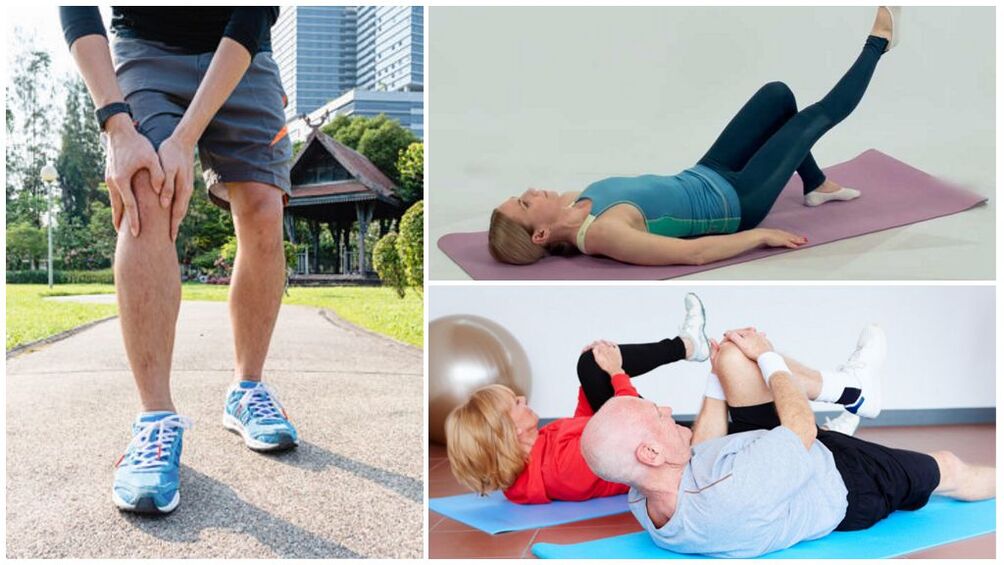
If you have developed knee osteoarthritis, therapeutic exercises should be done daily.Special exercises help to stimulate blood circulation in the joint, which prevents further destructive processes in the cartilage.Exercise therapy will also increase mobility in the affected knee and prevent pain.However, any gymnastics is contraindicated in acute cases of the disease.
Therapeutic gymnastics for knee joints by Dr. Evdokimenko
The objective of this complex of therapeutic exercises is to make the muscles surrounding the joint work without loading it.Gymnastics using the Evdokimenko method shows very good results for arthrosis of the knee joint.
Exercises:
- Lie on your stomach, stretch your legs and arms at your sides.Raise your straight leg above the floor to a height of 15 cm, tighten your buttocks and thigh muscles.Maintain this leg position for 30 to 40 seconds.Put that down.Repeat the movement with each leg 1 time.
- Raise your straight leg 15 cm above the floor and hold it for 1–3 seconds.Return to original position (IP).Do 10-12 reps for each leg.
- Bend your knee 90 degrees.Raise your bent leg to a height of 10 cm from the floor and hold it for 30-40 seconds.Do this movement with each leg 1 time.Then repeat the same exercise but hold each leg for 1-3 seconds.Do 10-12 reps on each leg.
- Raise two straight legs above the floor by 10–15 cm.Spread them to the sides and bring them back.Without lowering your feet to the floor, perform the movements 8 times.In this case, the thigh muscles should work as much as possible.
- Lie on your side.Bend your leg at the knee.Leave the top one straight and raise it 45 degrees above the floor.Hold like this for 30 to 40 seconds.Perform the exercise 1 time on each leg.
- Sit in a chair.Raise your leg as straight as possible at knee height.Hold for 30 seconds.Lift each leg 2 to 4 times.
- Stand.Lean against the back of the chair.Stand on your toes.Hold for 30–60 seconds.Return to IP.
- Stand on your toes and hold this position for 1-3 seconds.Return to IP.Repeat the movement 10-12 times.
- Place your right foot completely on the floor.Stand on the tip of your left foot.Gently rise onto your toes with your right foot and lower your left heel to the floor.Roll like this 10–12 times.
This author's physical education is more intense than the previous one.It is only possible at the first signs of gonarthrosis.Before you start practicing on your own, consult your doctor.
If you feel intense pain when performing movements, stop immediately.
Surgical methods
As it is impossible to cure osteoarthritis of the knee joint with completely conservative methods, in severe cases doctors resort to surgical techniques.
One of the most effective is knee replacement, that is, replacing the friction surfaces of the joint with artificial surfaces.
The recovery period after endoprosthesis is 3 to 6 months.
The following surgical interventions are also performed:
- arthroplasty - plastic surgery to restore the normal structure of the joint;
- corrective osteotomies – correction of valgus or varus deformities of the legs that can occur in advanced forms of osteoarthritis.
Folk remedies
Home remedies can serve as a wonderful complement to traditional therapy.
However, before treating knee osteoarthritis with folk remedies, consult your doctor, as some natural ingredients may have contraindications or may not be combined with the medications prescribed to you.
Here are some effective and time-tested recipes:
- Beef hooves and knees - help restore cartilaginous tissue.Boil them for several hours.Drink 100 ml of broth before each meal.
- Honey, apple cider vinegar - relieves swelling and pain.Mix the components in a 3 to 1 ratio. At night, make compresses and apply for 30 minutes.
- Jerusalem artichoke – helps relieve pain.Pour 350 g of crushed Jerusalem artichoke leaves and stems with 2 liters of boiling water.Cool to room temperature.Soak a gauze bandage in the infusion and apply it to the painful joint.
Prevention
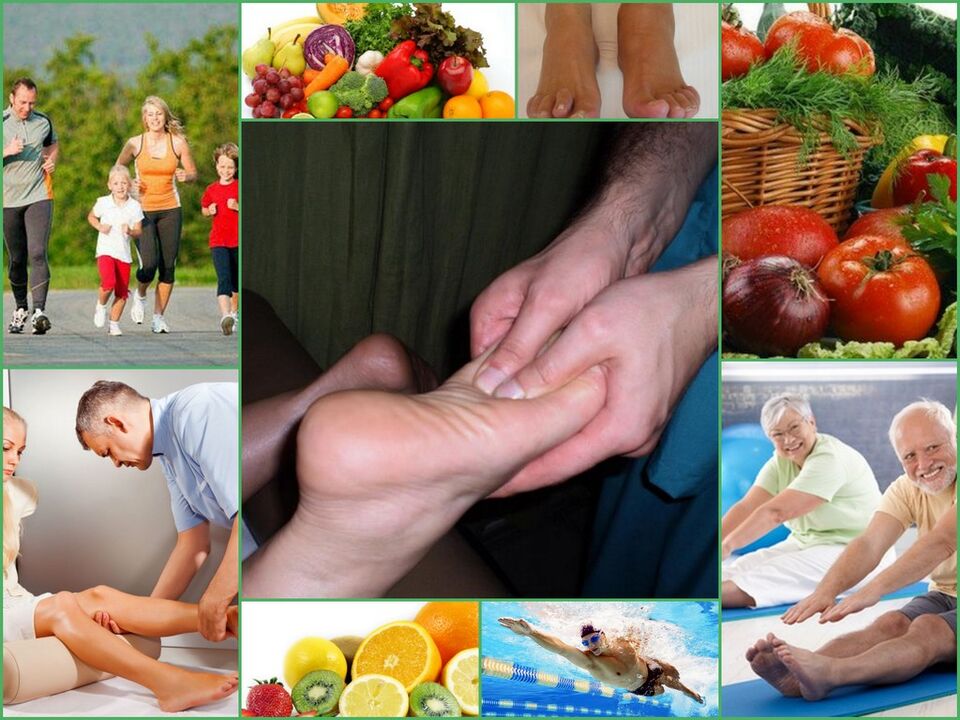
Preventive measures are very simple:
- Exercise, but don't put too much stress on your knees.Never run on asphalt.Special trails or dirt roads are suitable for running.
- Prevent knee injuries or treat them immediately.In case of bruises and sprains, immediately contact a traumatologist and follow all his recommendations.
- Eat right.
- Give up bad habits.
Forecast
Osteoarthritis is a disease that cannot be completely cured with conservative methods.
However, don't despair.As long as you strictly follow all of your doctor's recommendations, you can avoid complications, relieve pain, and improve the joint's range of motion.
Do not postpone a visit to a specialist, as in later stages the disease can cause deformities and disabilities in the legs.Modern medicine treats them surgically.